
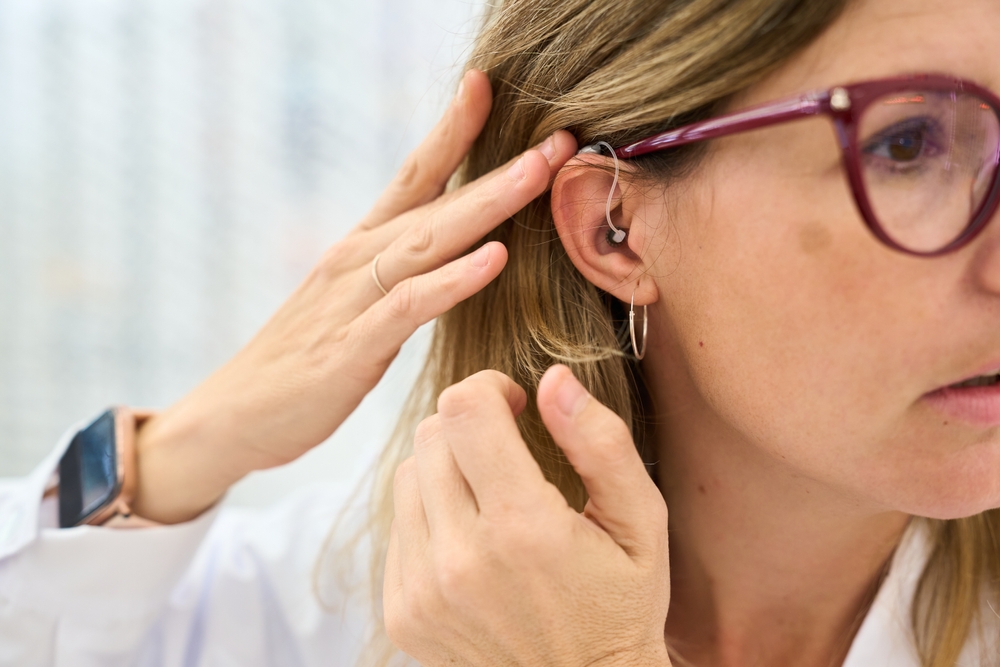
Many people delay getting hearing aids because they don’t think they’ll like how they look or feel. Such reluctance is perfectly natural when you consider past technology! In various scenarios, patients expressed fear that wearing an obvious device would cause peers to omit them from casual conversations due to perceived listening limitations.
For many people, this image has stuck, making them hesitant to take the next step. But the reality is that today’s modern hearing aids look and feel very different from what you might expect. Thanks to rapid technological evolution, modern devices are remarkably downsized, highly ergonomic, and exceptionally covert.
If you have spent years avoiding an audiologist due to the appearance of old devices, now is the perfect moment to explore today’s sleek alternatives!
Dispelling the Myth: Modern Devices Have Transcended Older Styles
If you close your eyes and picture a hearing aid, you might imagine something large, hooked over the ear, and visible from across the room. If that’s the case, you’re thinking about hearing aids circa the 1980s and ’90s.
In the intervening decades, the entire field of otolaryngology and acoustic engineering has undergone a massive paradigm shift. Continuous refinements in ergonomic styling, nanometer-scale circuitry, and digital audio engineering have radically overhauled the modern cosmetic profile. Today’s instruments are profoundly smaller, remarkably streamlined, and strategically engineered to blend flawlessly into your natural anatomy or vanish altogether.
Numerous modern instruments are inserted completely within the ear canal structure, rendering them undetectable throughout standard daily dialogue. Different configurations sit comfortably behind the ear but feature such a low profile and featherweight build that observers naturally miss them.
Understanding Your Options: A Guide to Contemporary Device Form Factors
If you are curious about the structural choices available for your rehabilitation, here is an accessible overview of current styles:
The Invisible-in-Canal (IIC) Form Factor
These are as discreet as it gets. An IIC device is positioned entirely past the second bend of the auditory canal, fabricated from a personalized physical matrix of your unique anatomy. From a normal conversational distance, they’re essentially invisible. They’re a popular choice for people with mild to moderate hearing loss who prioritize subtlety.
Receiver-in-canal (RIC) / Receiver-in-the-ear (RITE)
This particular layout has become the benchmark standard for contemporary hearing health restoration. A micro-housing rests behind the upper pinna, transferring processed sound via an ultra-fine, translucent micro-wire to an acoustic driver nestled inside the canal. To a casual observer, their clean lines often mimic high-end commercial wireless earbuds. Surrounding individuals will remain completely unaware of the technology unless they actively look for it.
Behind-the-ear (BTE)
This style positions the main component body post-auricularly, offering a slightly larger footprint that remains beautifully sculpted and sleek. Clinically indicated for profound or severe hearing deficits, they deliver immense acoustic power without the outdated, conspicuous mass of the past.
The key takeaway: Today’s discreet hearing aids are designed to fit your life, not announce themselves.
Modern Hearing Aids: Looking Better and Doing a Lot More
The evolution of these medical devices encompasses much more than a superficial face-lift. Today, they function more like smart devices than traditional medical equipment. A vast majority feature native Bluetooth connectivity, enabling seamless, wireless streaming of telephonic communication, media, and television audio directly into your auditory pathway.
Through proprietary mobile apps, patients can effortlessly adjust acoustic thresholds or modify directional settings completely hands-free. For instance, when entering a highly reverberant dining space, you can suppress ambient acoustic noise and sharpen speech clarity in mere moments. Advanced rechargeable battery banks have effectively replaced the small, fragile power cells that used to cause immense frustration. Users simply place their instruments into a charging cradle before sleep, mirroring standard smartphone maintenance routines.
Overcoming the Psychological Barriers to Better Hearing
Even knowing all of this, it’s easy to hesitate. Acknowledging a sensory deficit and investigating rehabilitation options often forces a difficult confrontation with our own vulnerability and bodily changes. This realization can occasionally induce feelings of helplessness, leaving patients feeling detached from their own physical autonomy.
However, an alternative, empowering framework exists: utilizing hearing technology is never an indicator of structural failure. They are merely an intelligent adaptation to a universal milestone of aging that impacts us all eventually. They’re proof that you’re taking action to support and equip your body in essential ways.
Imagine wearing a discreet, barely (if at all) visible device and finally being able to follow along in conversation, hear better in crowds, and focus on the things that really interest you. Talk about empowering!
Experience Contemporary Hearing Technology Firsthand
To dismantle old assumptions, the best strategy is to witness these design breakthroughs with your own eyes. We encourage you to drop by our office, address your concerns, and hold these miniature devices yourself with zero sales pressure. Think of your visit as an educational open-house to experience the lightweight engineering of modern hearing instruments firsthand.
Most people leave surprised by how small, comfortable, and natural modern hearing aids have become! Please contact our patient care coordinators or utilize our digital portal to secure your consultation this week.